CX Strategy

Time
CX strategy / service design
Role
Sole CX Designer/Strategist
Team
RMIT UNI Project
Platform
Broker-led home buying journey
Context
Lendi Group operates in the fintech and home loan broking industry in Australia.
They combine digital platforms, brokers, and retail stores to support customers throughout the home loan journey.
Project goal
To understand what customers value most when working with brokers during the home buying journey, and how they prefer that value to be delivered.
Kicking Off Discovery
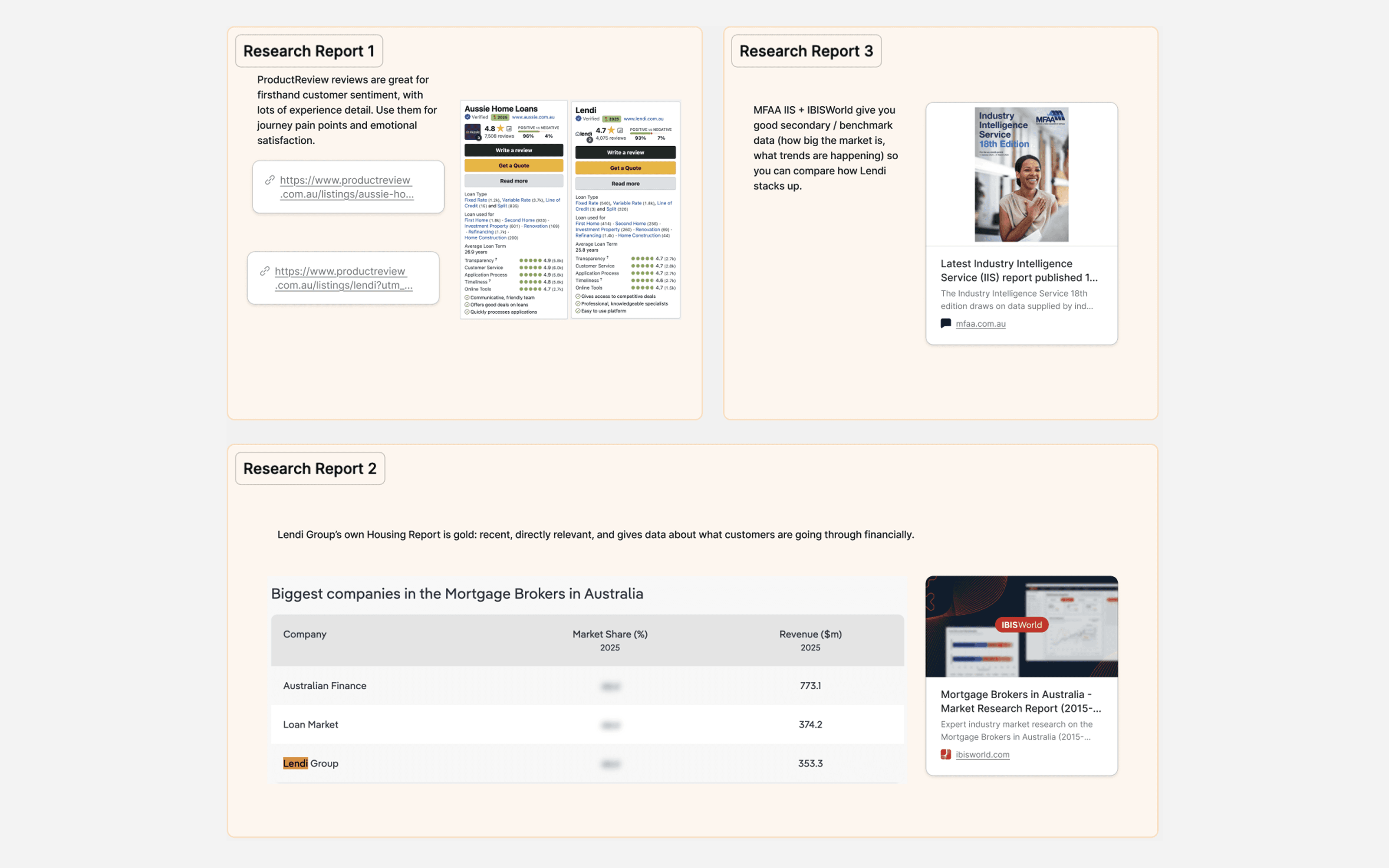
I started by collecting publicly available datato gain an initial understanding of customer needs, pain points & market landscape.
Report 1: Customer Reviews Analysis
Captured customer sentiment, pain points, and emotional experiences across the home buying journey.
Report 2: Internal Market Insights (Lendi Group)
Provided recent and relevant data on customers’ financial situations and challenges during the home buying process.
Report 3: Industry Benchmarks (MFAA & IBISWorld)
Offered market benchmarks and industry trends, helping to understand the broader landscape and compare how Lendi performs.
Customer research
Research Goals
Goal 1
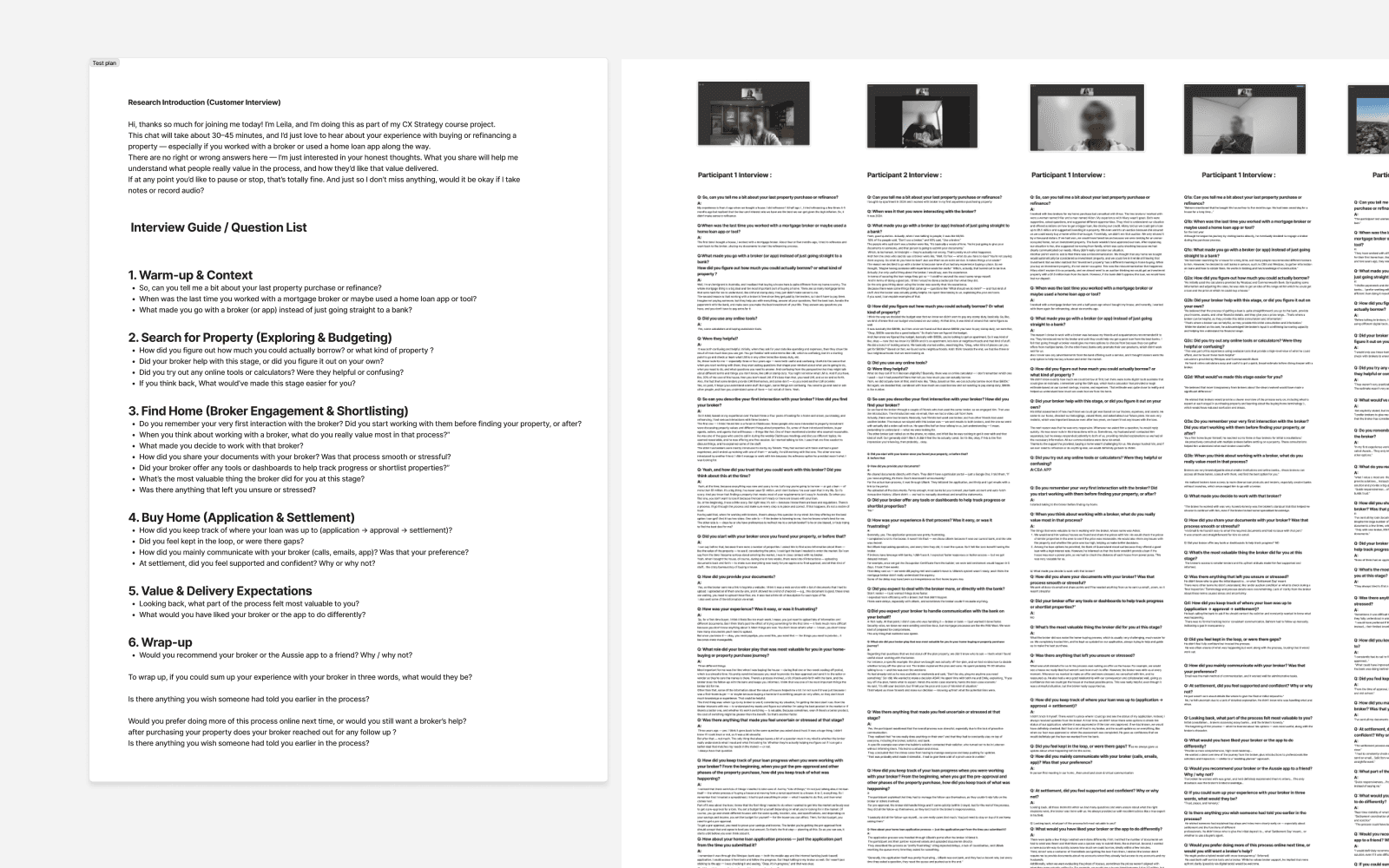
Understand what customers value most during the home buying journey (search → find → buy).
Goal 2
Identify pain points, needs, and expectations when working with a broker or using apps (such as Aussie) to connect with brokers.
Goal 3
Explore how customers want value to be delivered (e.g. speed, transparency, human guidance, digital tools).
Customer screening
Participants
5 customers who purchased or refinanced within the last 1–2 years
A mix of first-time buyers and refinancers
Each participant had worked with multiple brokers (2–3 on average)
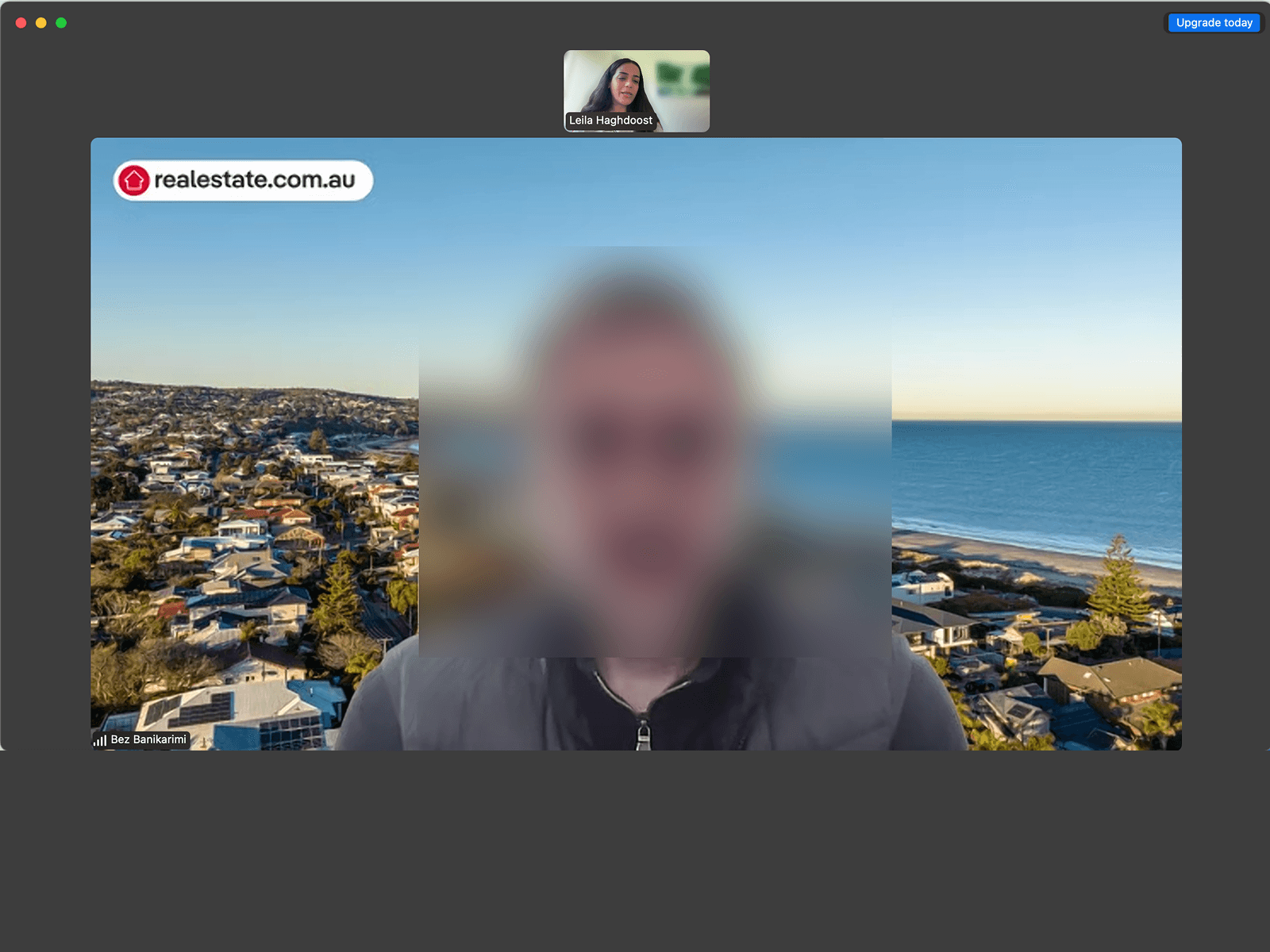
Interview session 1

Interview session 2

Interview session 3

Interview session 4
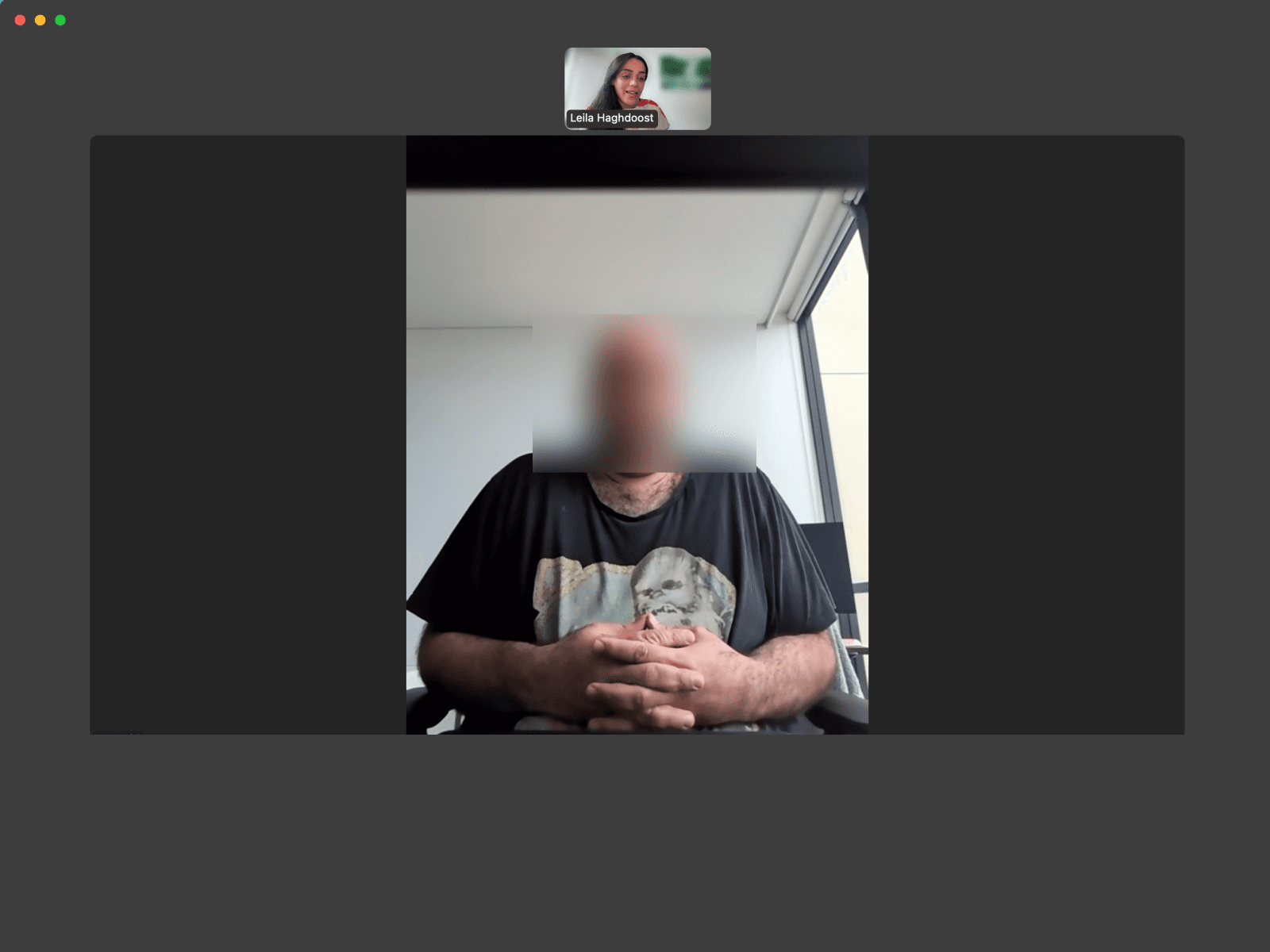
Interview session 5

Interview session 6
Key Insights...
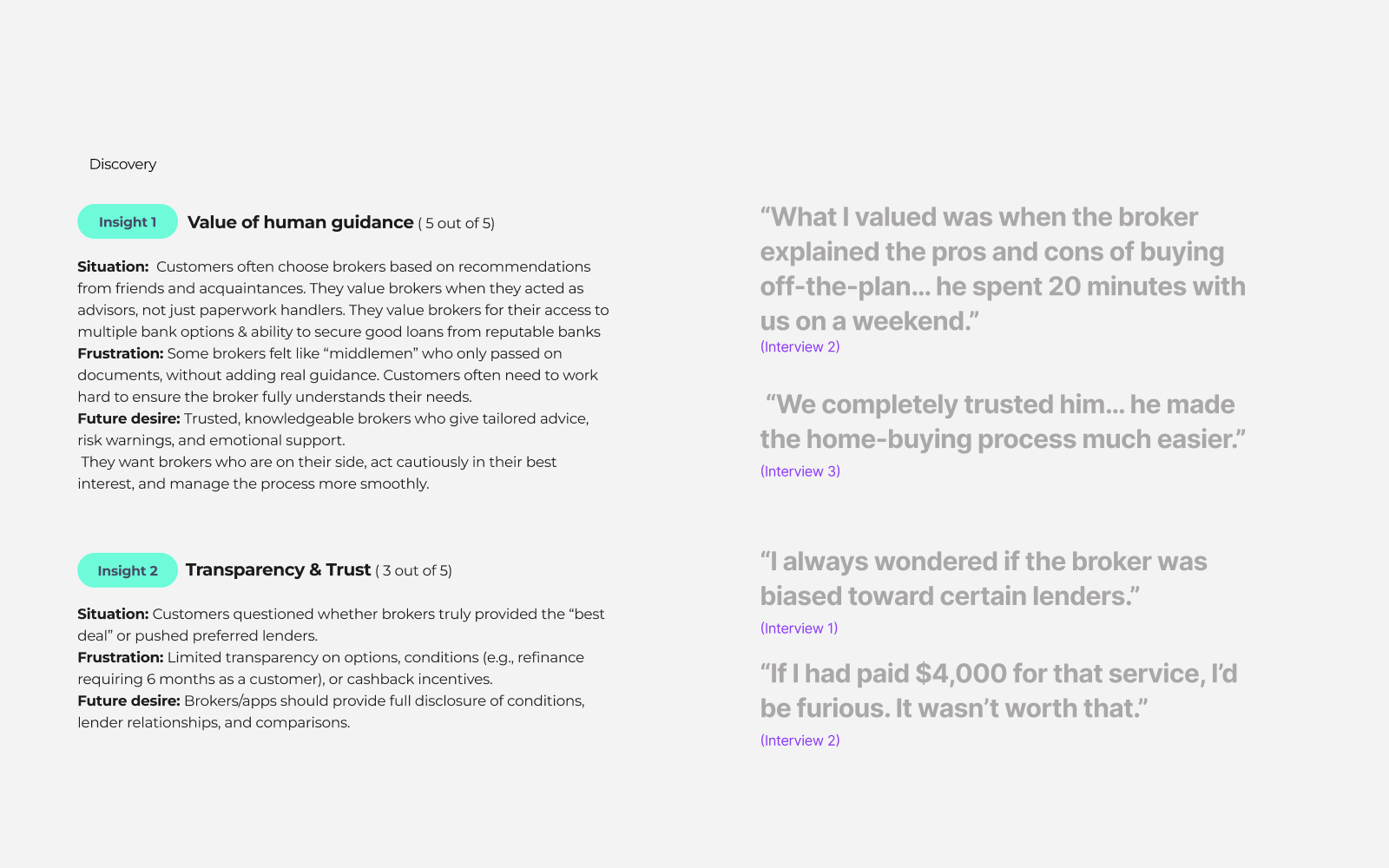
Human guidance matters most
Customers value brokers who act as trusted advisors, provide tailored advice, and reduce the emotional stress of the process.
Trust requires transparency
Customers question broker recommendations when lender relationships and incentives are not clearly explained.
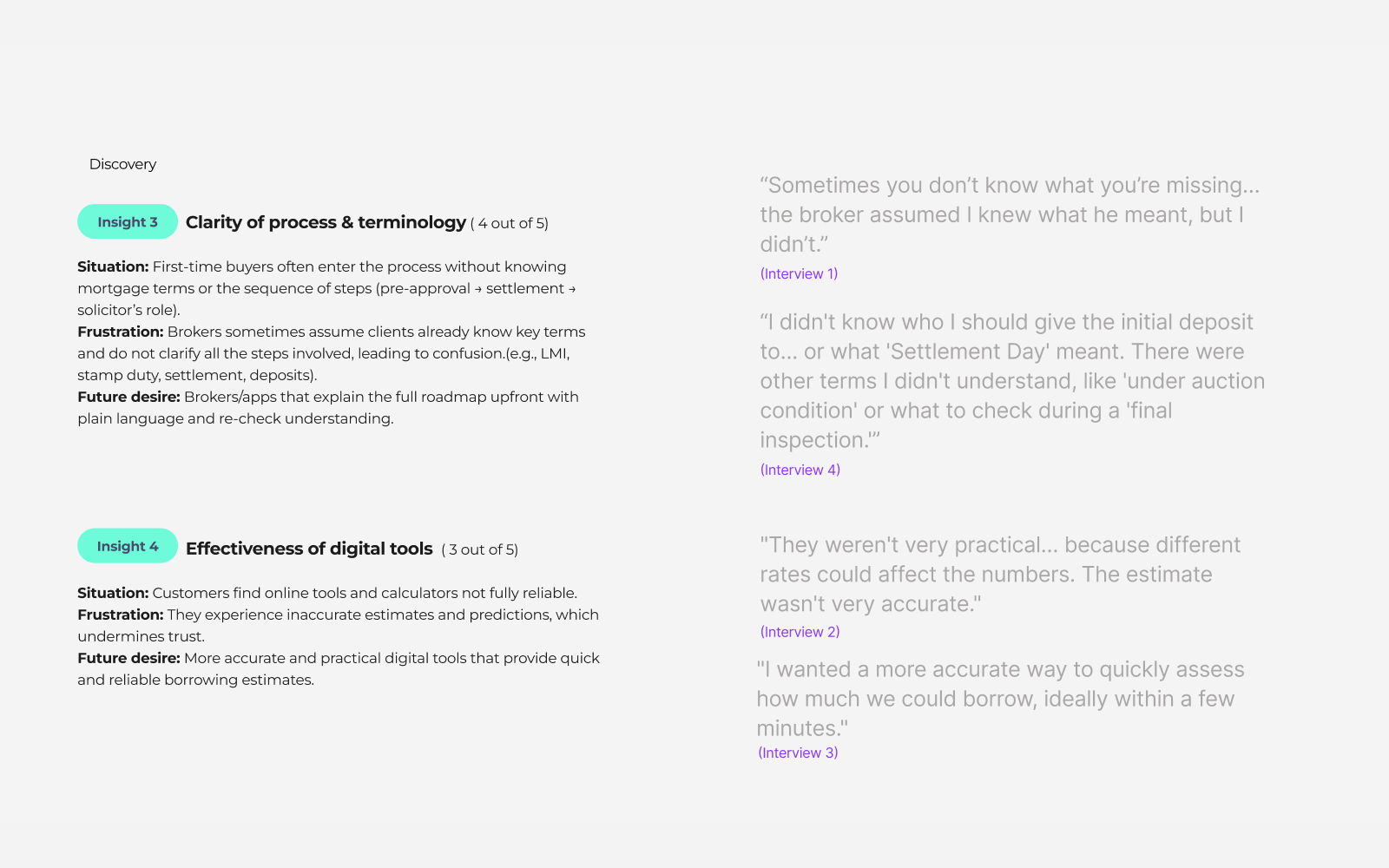
The process lacks clarity
First-time buyers struggle to understand steps, roles, and key terminology across the journey.
Digital tools feel unreliable
Online tools and calculators often provide inaccurate or unclear results, reducing trust.
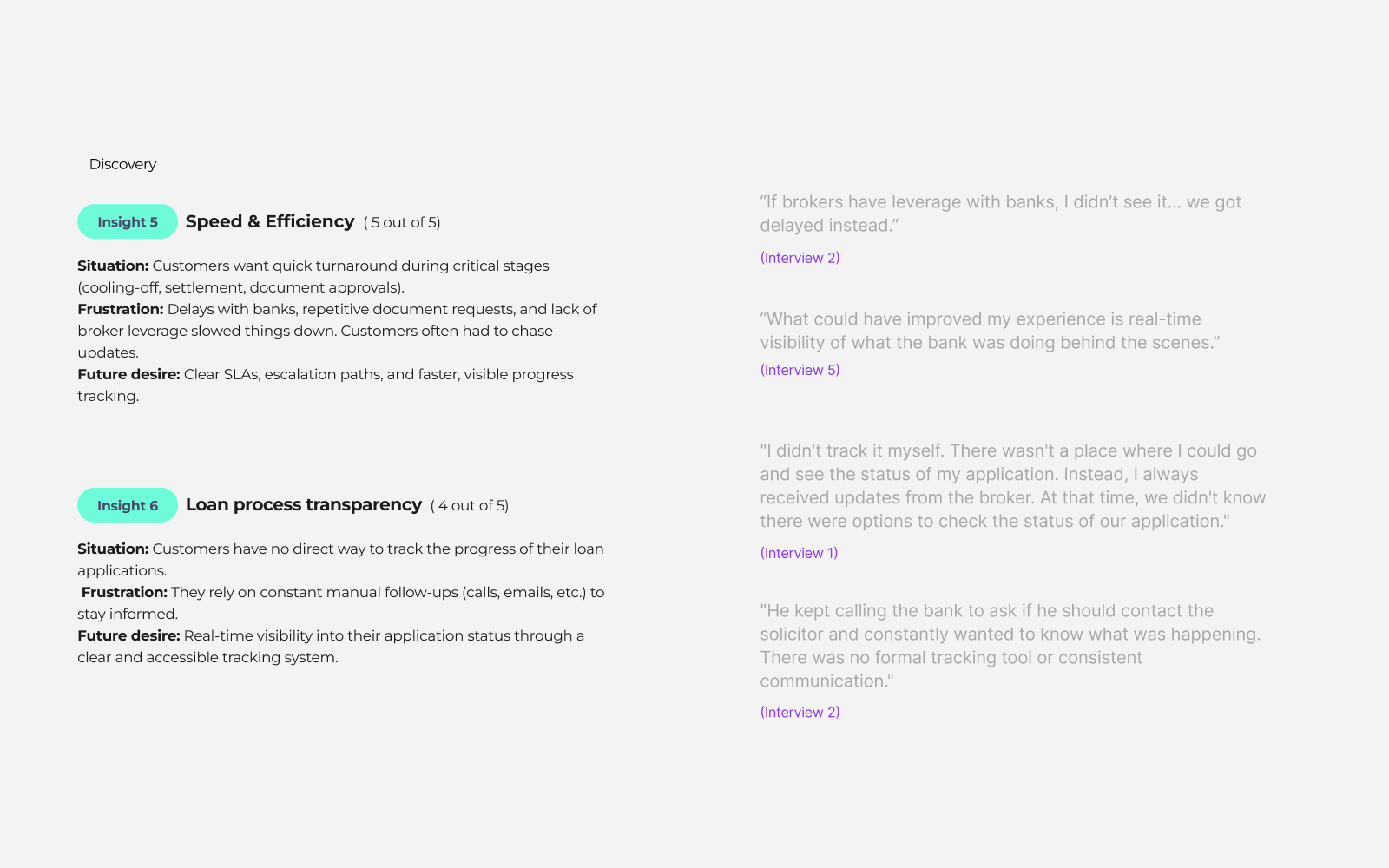
Speed is critical in key moments
Delays from banks, brokers, and approvals create frustration during time-sensitive stages.
Lack of progress visibility
Customers cannot easily track their application status and rely on manual follow-ups.
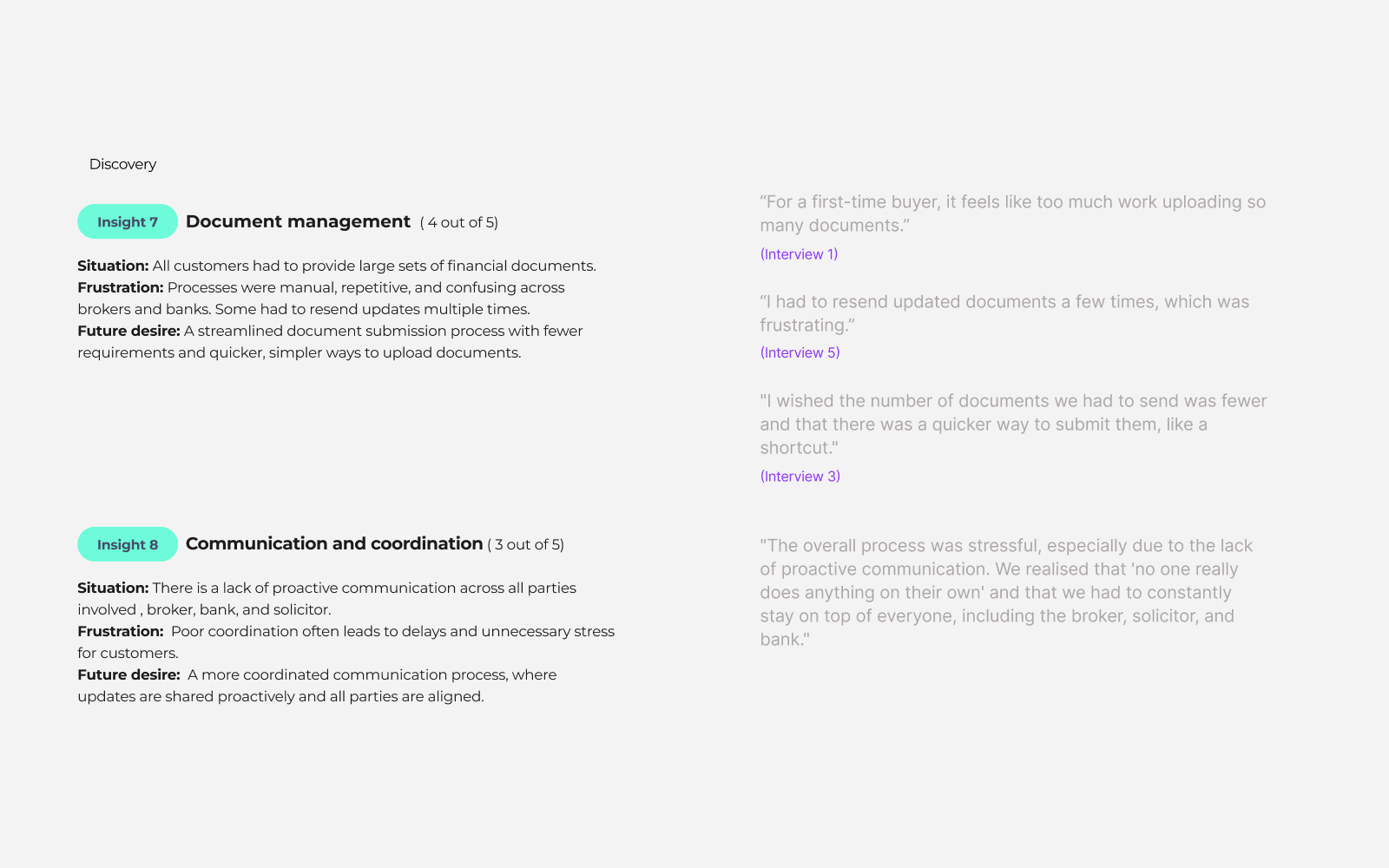
Document handling is painful
Submitting and managing documents is repetitive, manual, and often confusing.
Poor communication across parties
Lack of coordination between broker, bank, and solicitor leads to delays and stress.
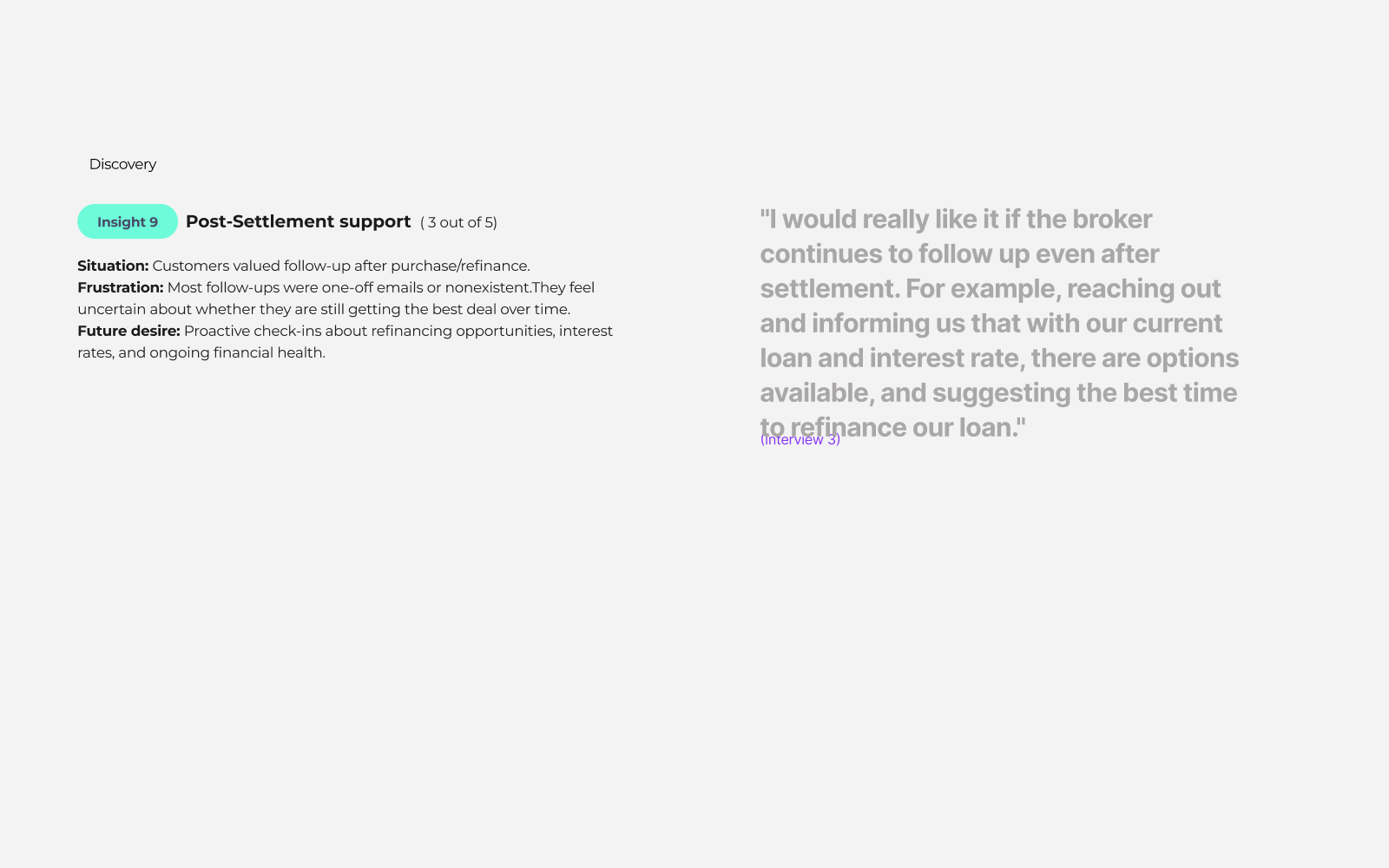
Support drops after settlement
Customers expect ongoing guidance, but post-settlement support is limited or missing.
Customer Archetypes
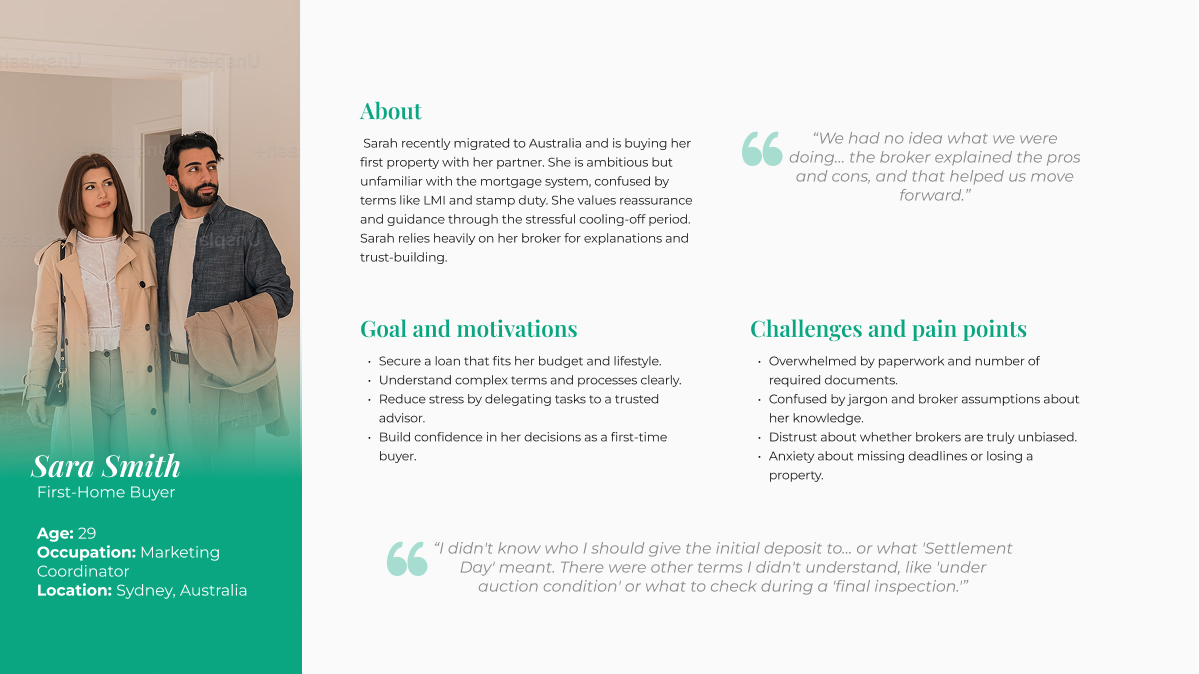
First-home buyer
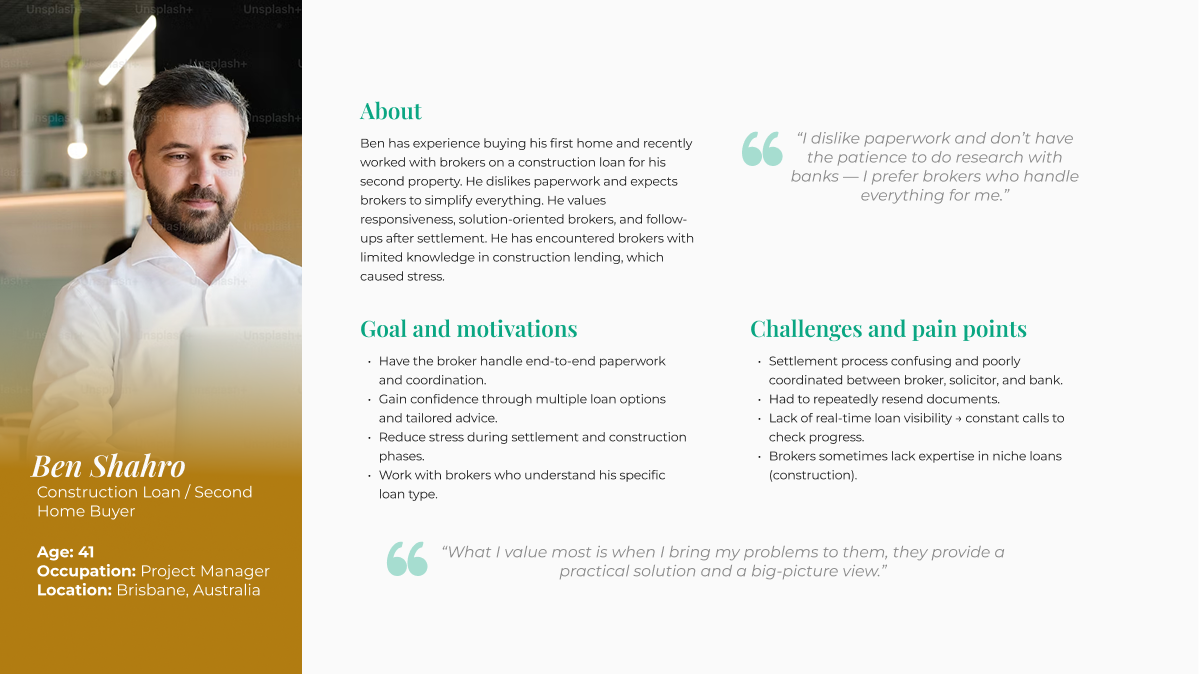
Needs reassurance, education, and a clearer roadmap. Often overwhelmed by jargon, process ambiguity, and document requirements.
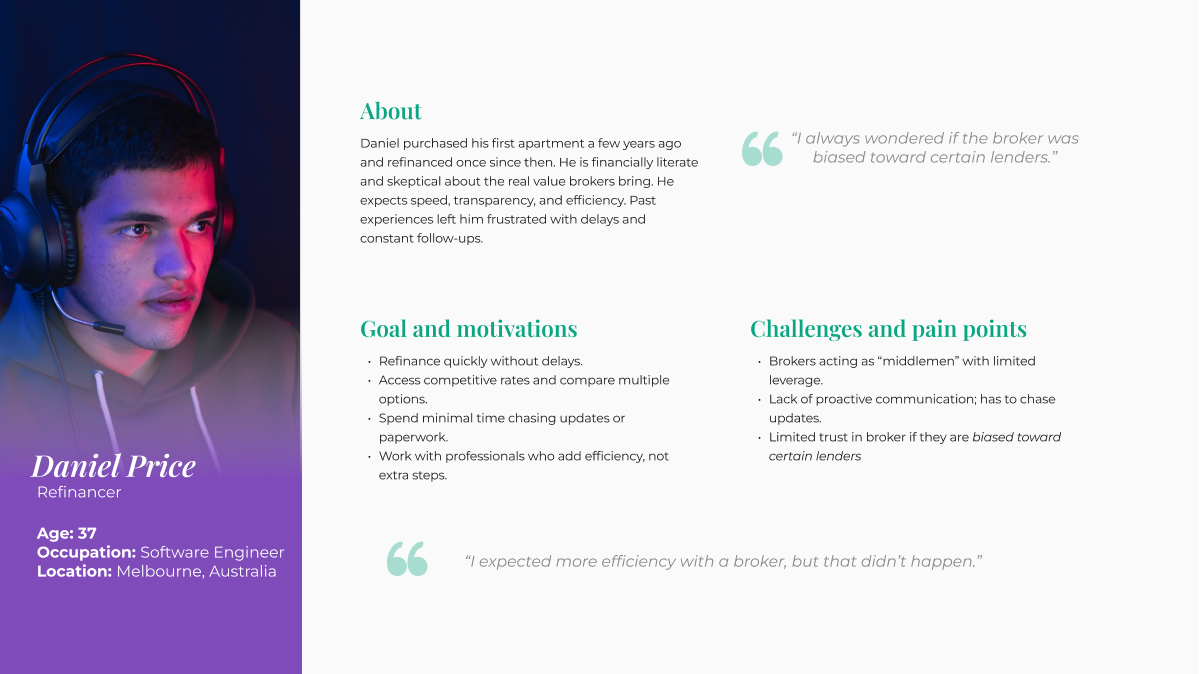
Efficiency-driven refinancer
Wants speed, responsiveness, transparency, and minimal admin. Less patient with delays or manual follow-up.
Experienced but overwhelmed borrower
Values a broker who can coordinate multiple parties, simplify specialist decisions, and reduce the operational burden of the journey.
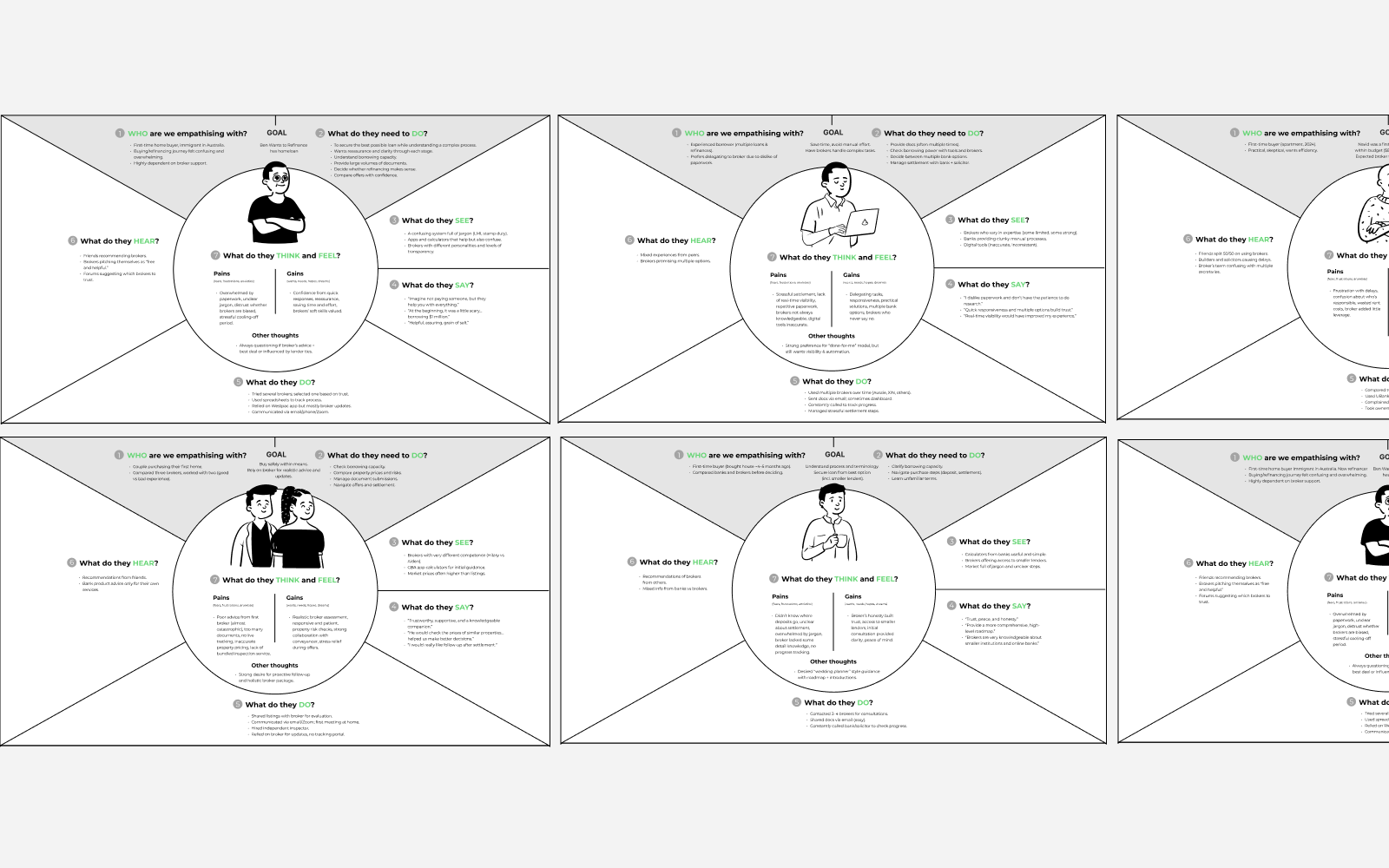
Use empathy maps / persona boards from the deck as supporting visuals
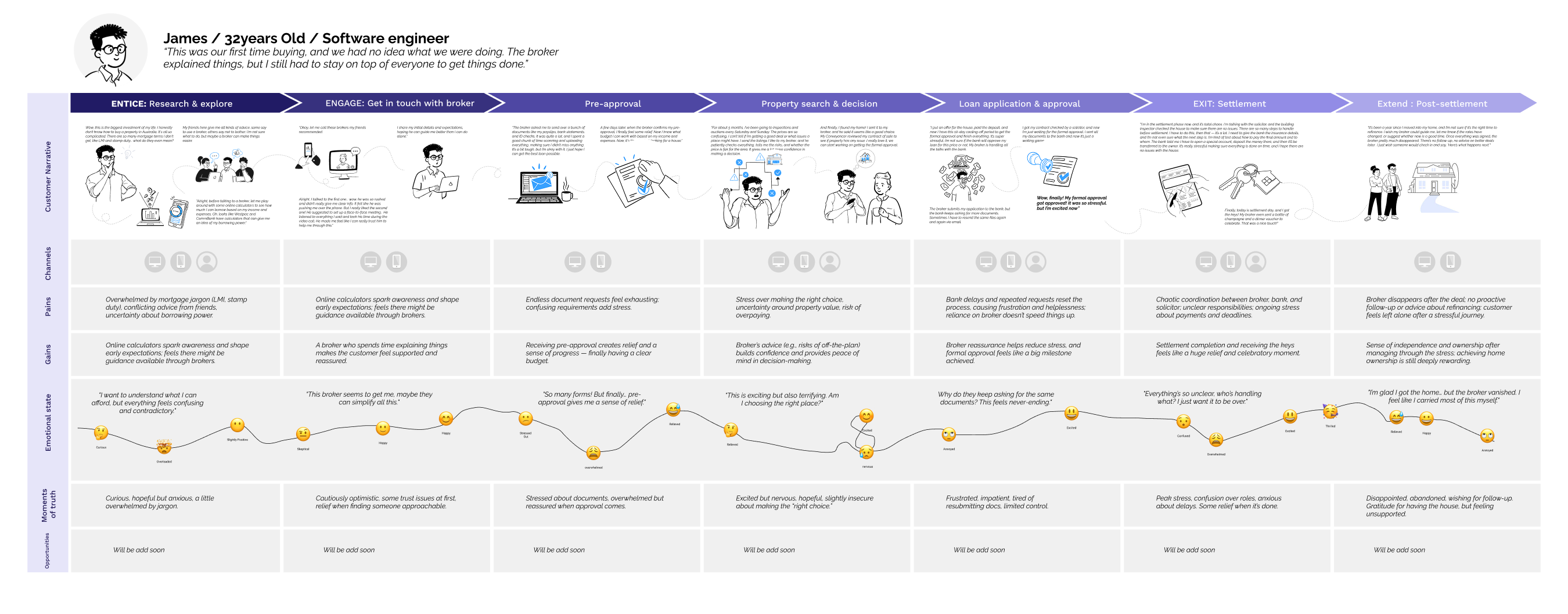
Mapping the customer journey
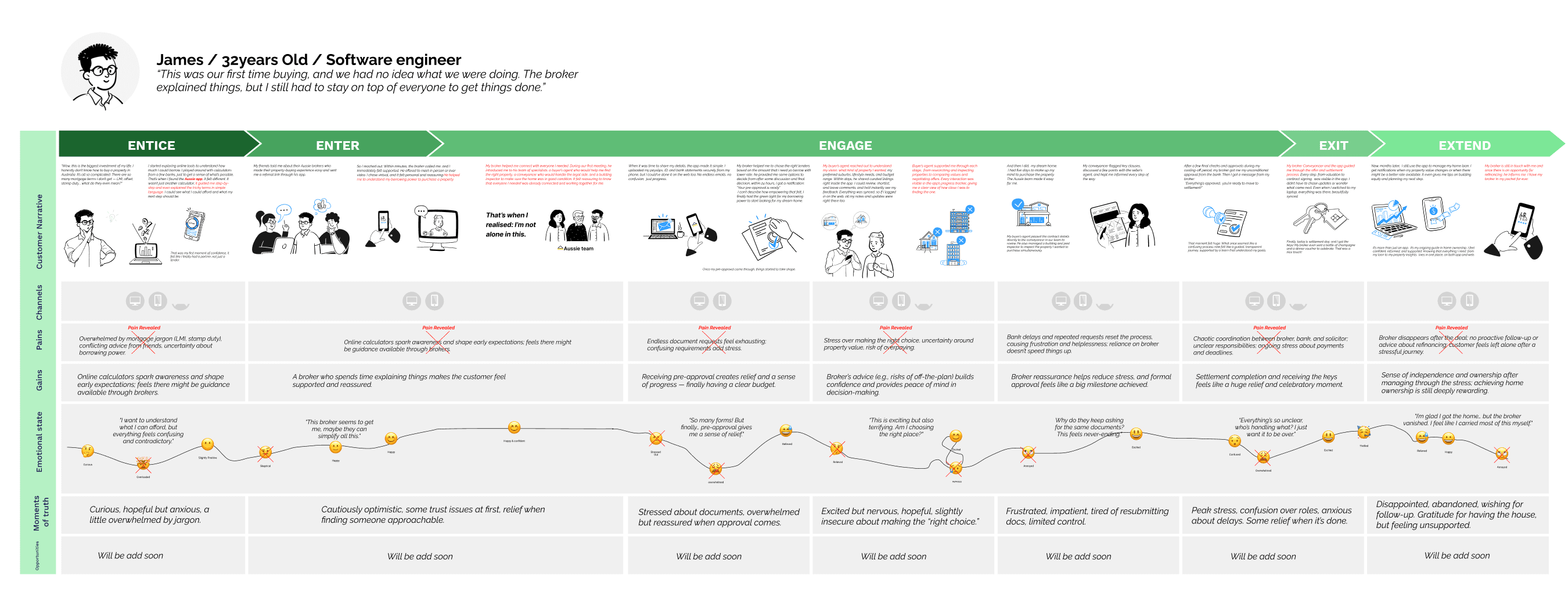
This experience map outlines the end-to-end journey of a customer buying a property with the guidance of a broker, highlighting key pain points, emotional states, and opportunities.
Defining CX strategy
Strategic analysis
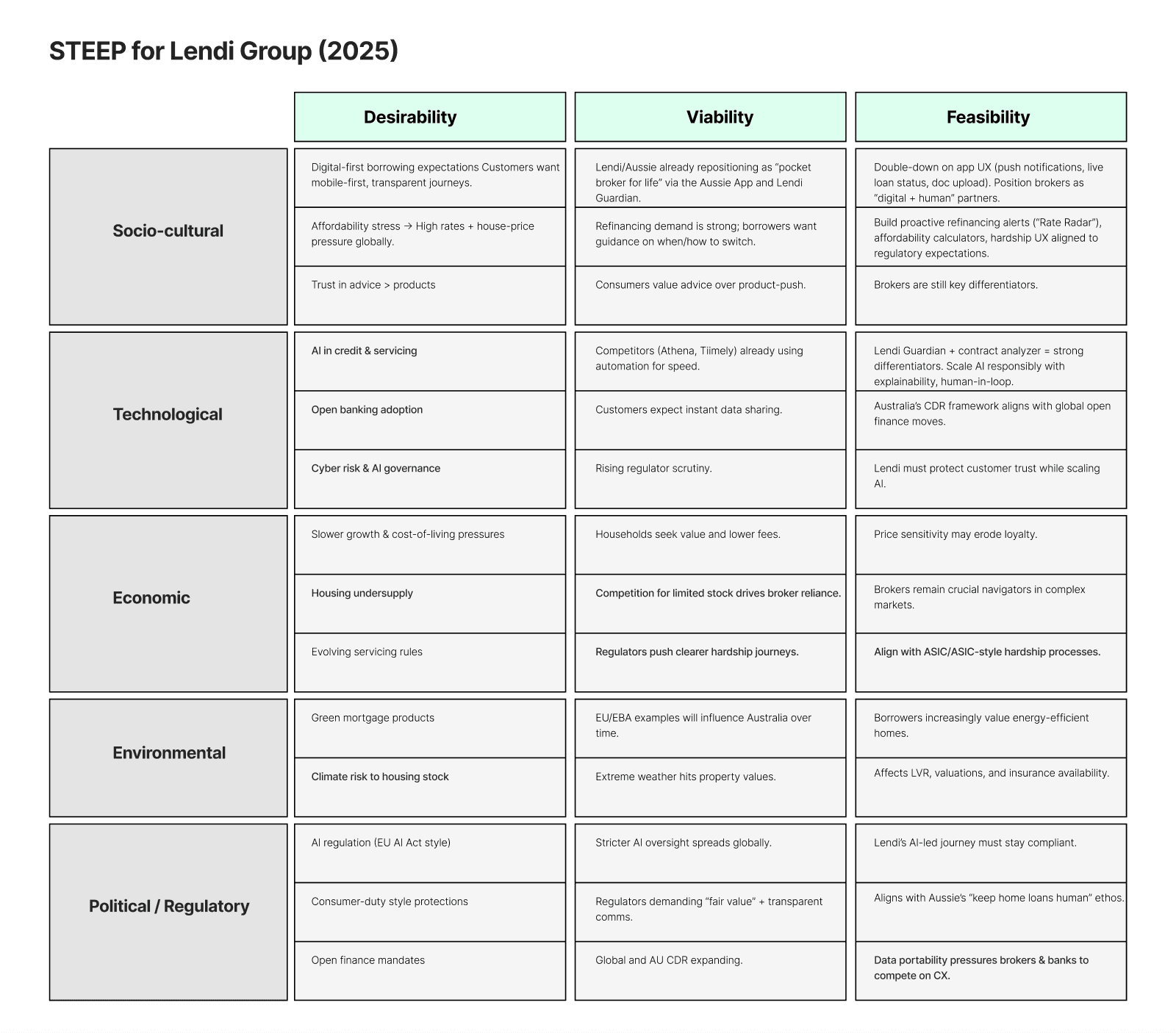
I used the STEEP framework to examine external factors impacting Lendi Group, including social, technological, economic, environmental, and political trends.
This helped me move beyond the immediate user journey and consider the external factors influencing customer expectations, broker roles, and market dynamics.
The outcome of this analysis highlighted key opportunities across desirability, viability, and feasibility — helping to align customer needs with business strategy and technical direction.
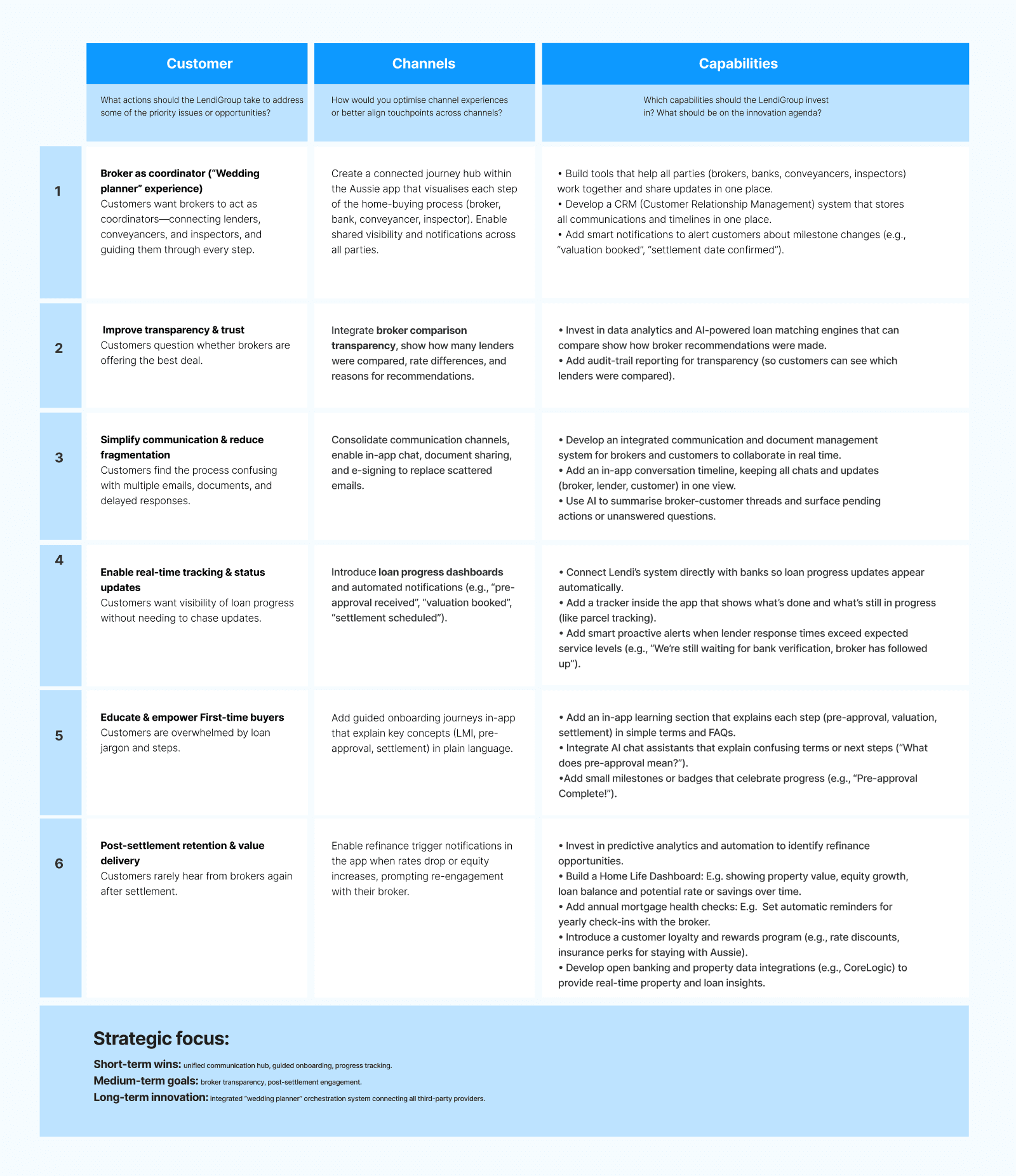
CX Maturity Opportunities
To identify opportunities for improvement, I assessed the current customer experience maturity across the journey.
This involved looking at how well Lendi Group supports customers across key touchpoints, and where gaps exist in meeting their expectations.
- Customer – what customers need and expect from the experience
- Channels – how these experiences are delivered across touchpoints
- Capabilities – what the business needs to enable and support these experiences
This helped translate research insights into clear, actionable opportunities, aligning customer needs with business and technology priorities.
CX Strategy Goals
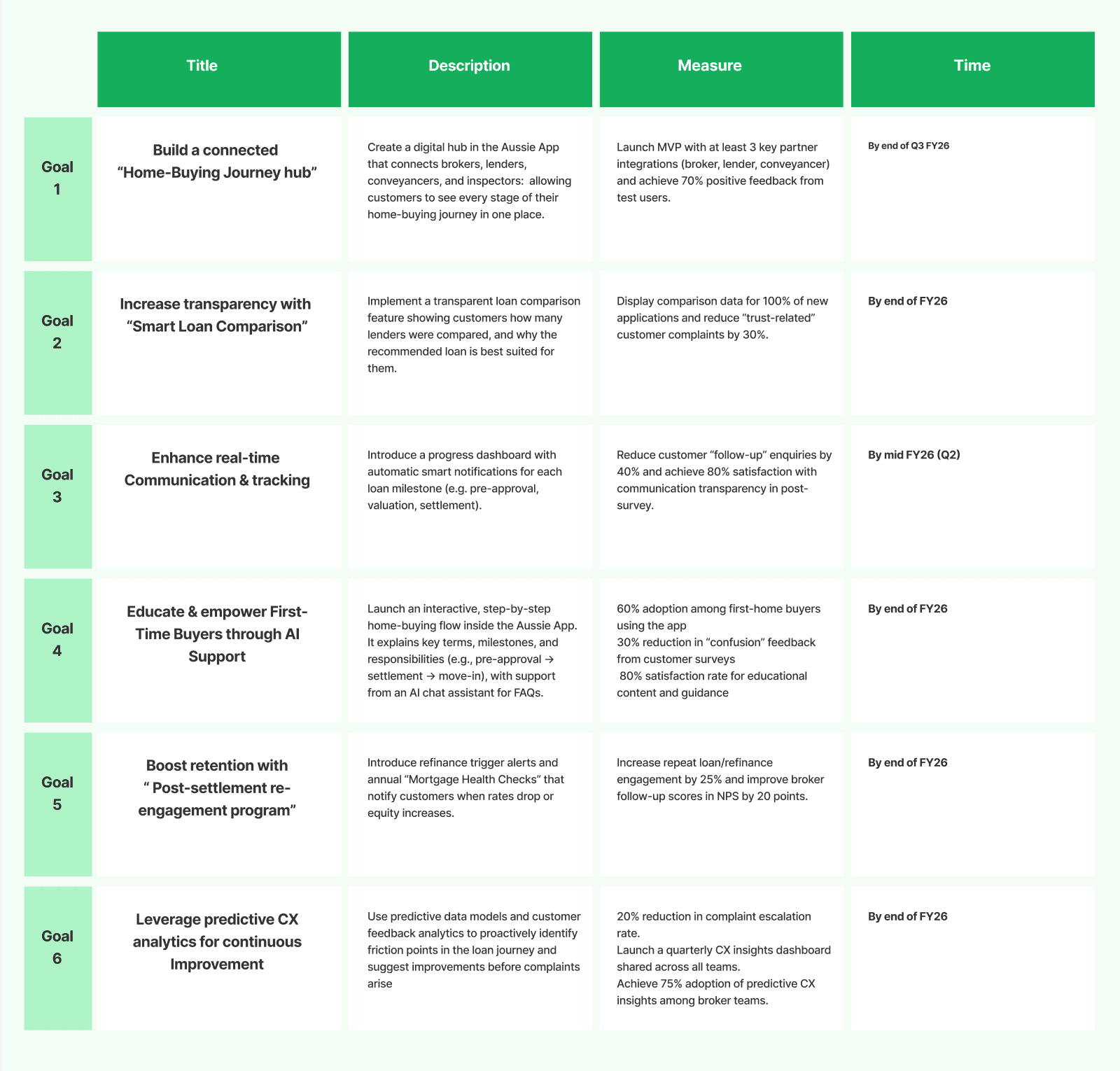
Based on the insights, I defined a set of CX strategy goals to guide the next phase of the experience.
Using a SMART approach, each goal was designed to be clear, measurable, and aligned with both customer needs and business priorities.
These goals provide a clear direction for delivering a more transparent, efficient, and customer-centred home buying experience.
Defining the "CX vision statement"
Empowering Australians to buy and own property with confidence, simplicity, and lasting trust.
Concept Exploration
I translated the opportunity areas into five future-state concepts. Together, they explored how Lendi Group could improve coordination, trust, visibility, and long-term value across the broker-led home-buying journey.
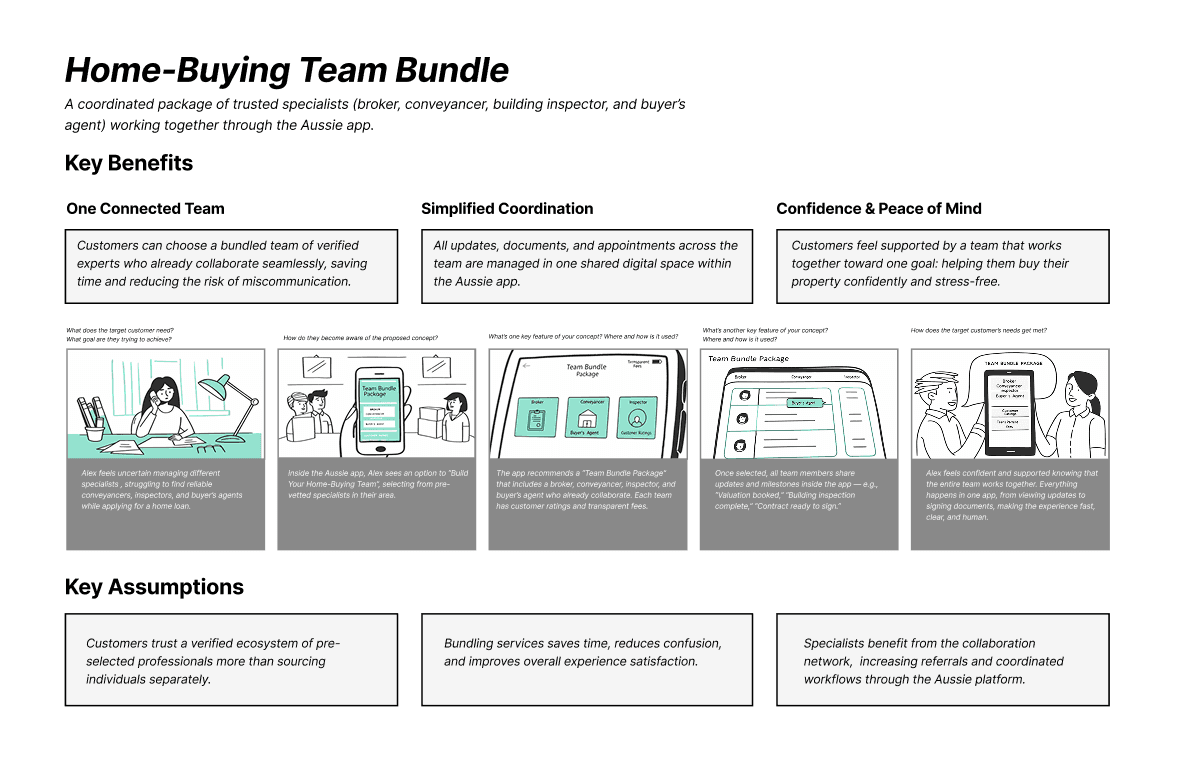
Home-Buying Team Bundle
A coordinated package of trusted specialists working together through the app.
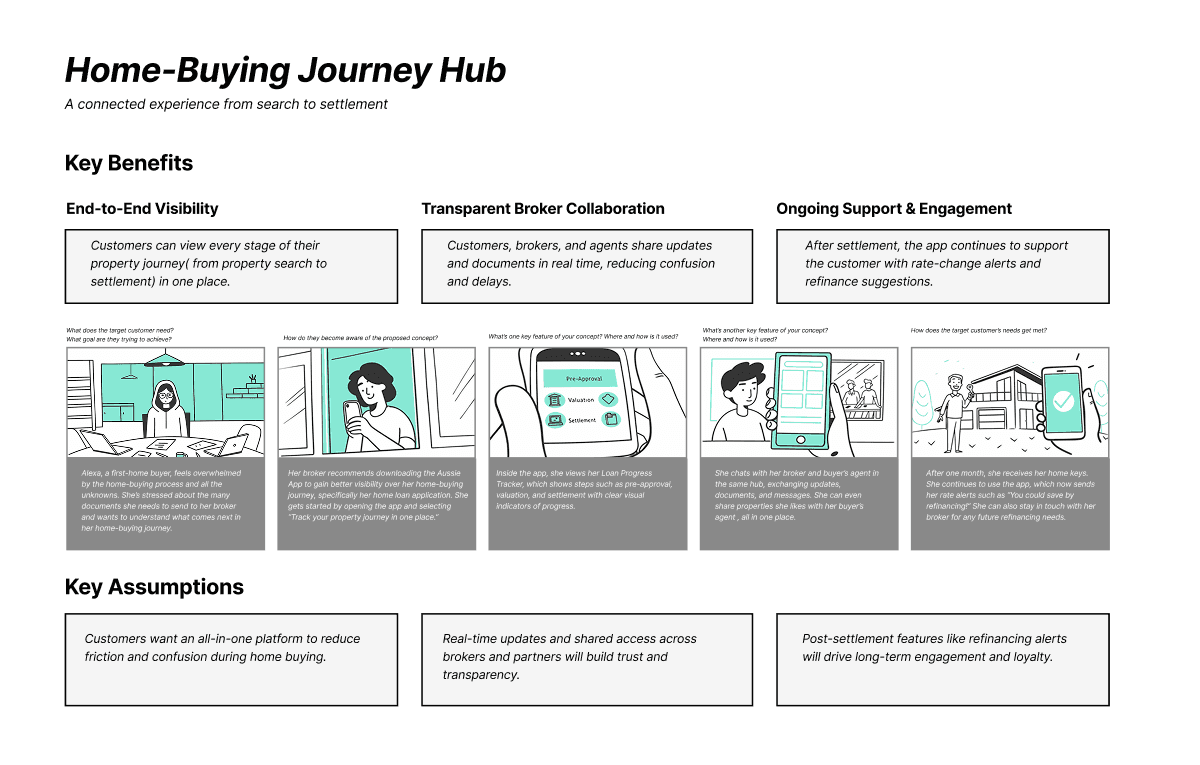
Home-Buying Journey Hub
A connected experience from search to settlement with shared updates and ongoing support.
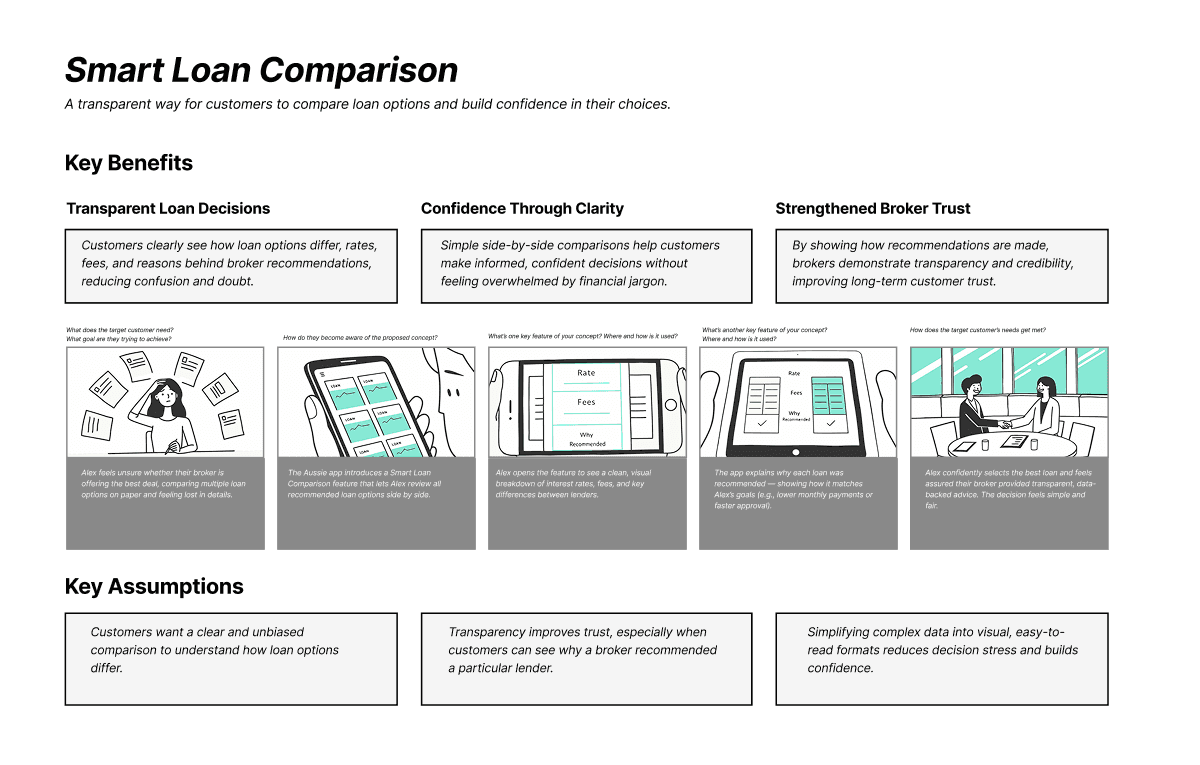
Smart Loan Comparison
A transparent way to compare options and understand broker recommendations.
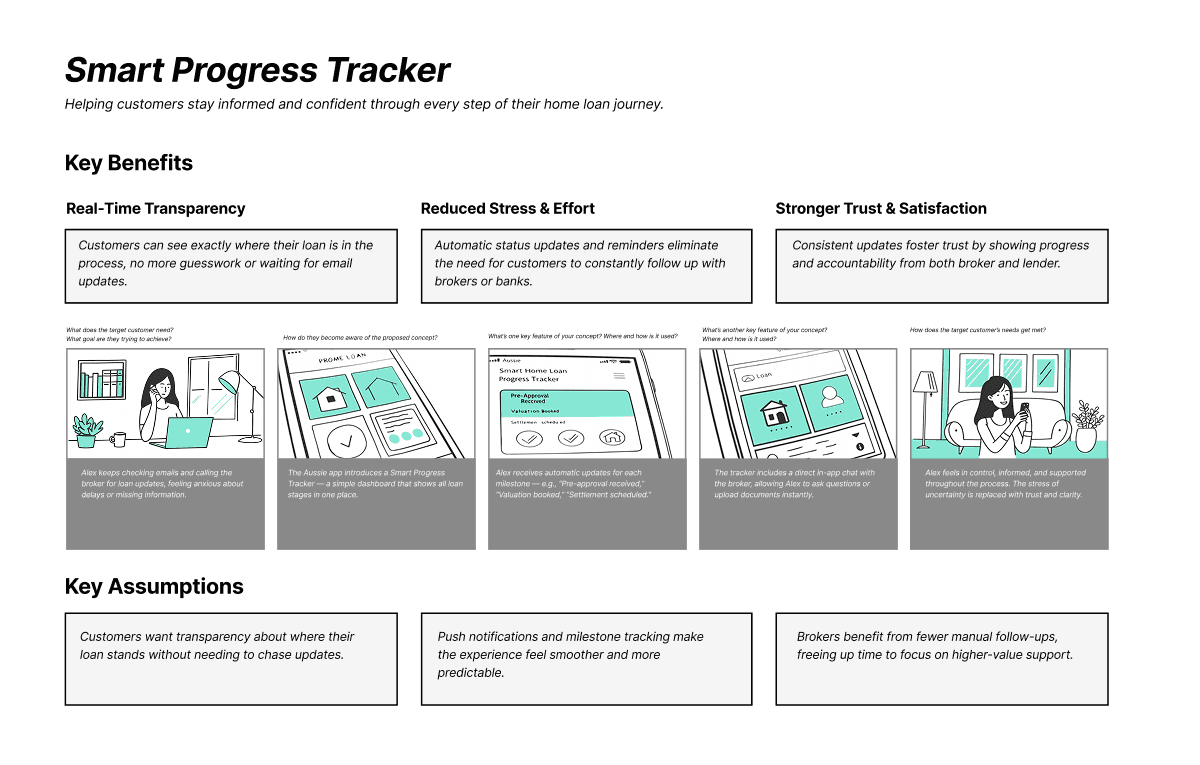
Smart Progress Tracker
A milestone tracker that reduces uncertainty and cuts manual follow-up.
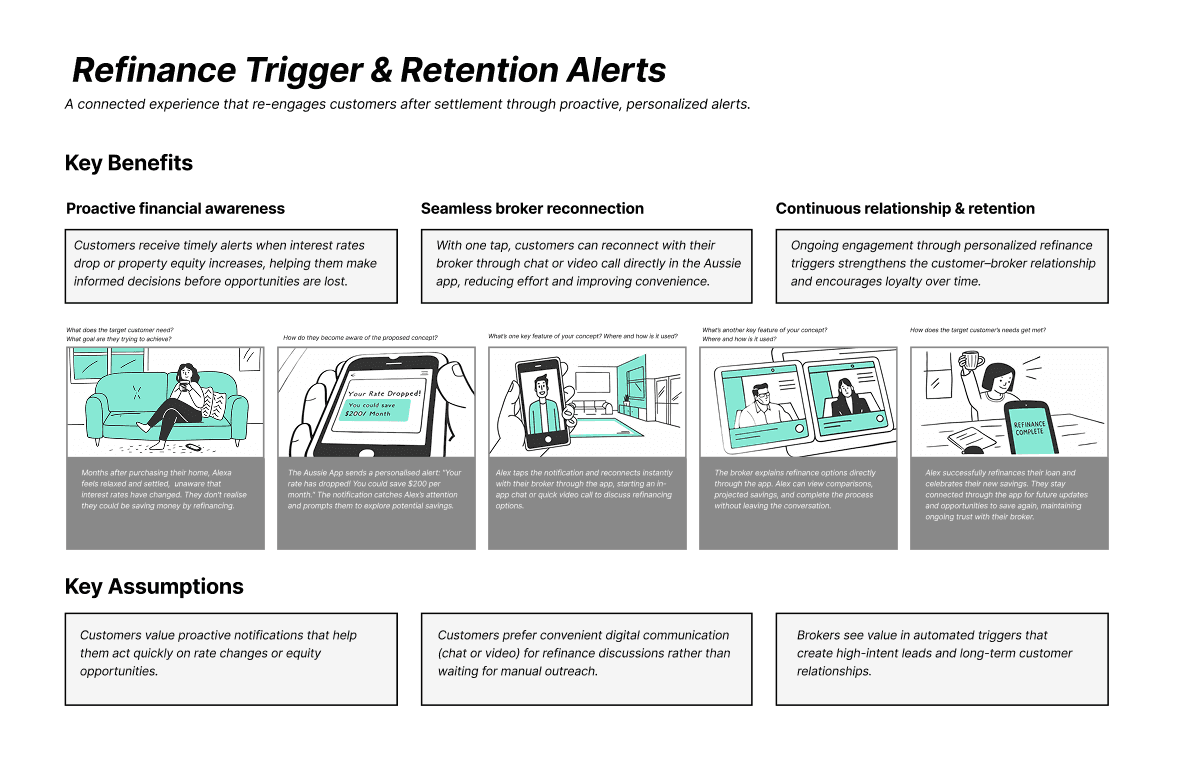
Refinance Trigger & Retention Alerts
A post-settlement experience that proactively reconnects customers when saving opportunities emerge.
Concept posters
Validation & Prioritisation
I tested all 5 concepts with customers and here are an snapshot of the testing and result.
I originally thought that:
Customers would value a more transparent, connected, and seamless home-buying journey, supported by digital tools that reduce manual work and bring all parties together.
I observed that:
Customers responded positively to connected services, proactive alerts, and progress tracking. However, they still wanted flexibility in choosing specialists and clear human guidance.
From my observation, I learnt that:
Customers value transparency and efficiency, but also need control, flexibility, and trusted human support throughout the process.
As a result of my test, I will:
Increase customer choice and flexibility Define clear ownership of communication Make AI support transparent and helpful Focus on high-impact features to improve trust and engagement
Creating a North Star Experience Map
Based on customer feedback, I created an aspirational experience map that represents the ideal customer journey Lendi Group should deliver.
This serves as a “North Star” to guide product development, design, and strategic decisions.
CX Success Metrics
I established metrics aligned to core CX initiatives to evaluate customer behaviour, satisfaction, and long-term value.
NPS
Trust & advocacy
Track how likely customers are to recommend Aussie or Lendi, reflecting long-term trust and the impact of key CX improvements.
CSAT
Milestone satisfaction
Measure customer satisfaction after key moments such as approval, settlement, and refinancing.
CES
Effort reduction
Evaluate how easy it is to compare loans, track progress, and connect with brokers through digital tools.
Churn Rate
Retention & loyalty
Track how many customers do not return to refinance, indicating the effectiveness of post-settlement engagement.
Adoption
Feature usage
Monitor how customers use new features like loan comparison, progress tracking, and refinance alerts over time.
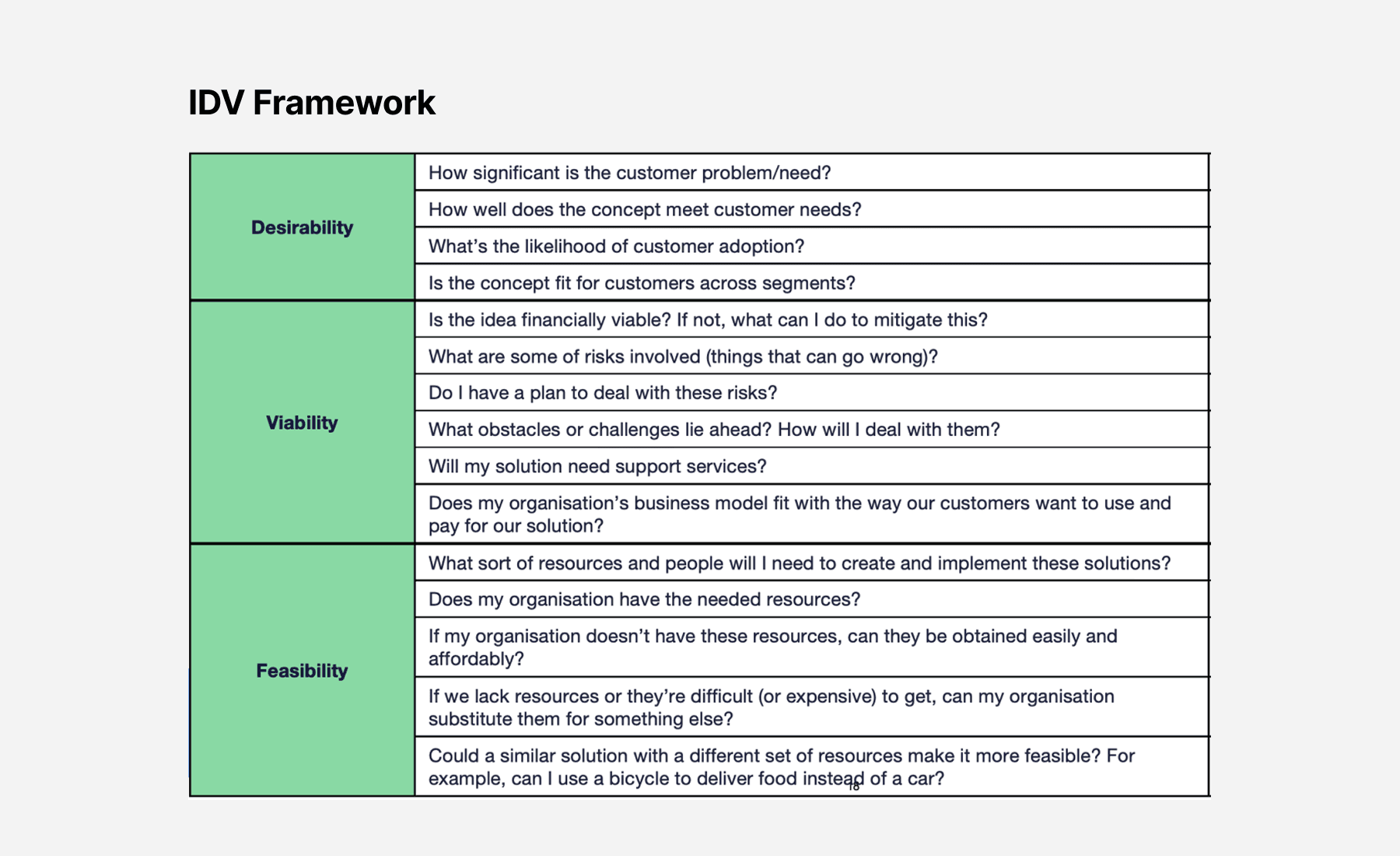
DVF Analysis (Desirability, Viability, Feasibility)
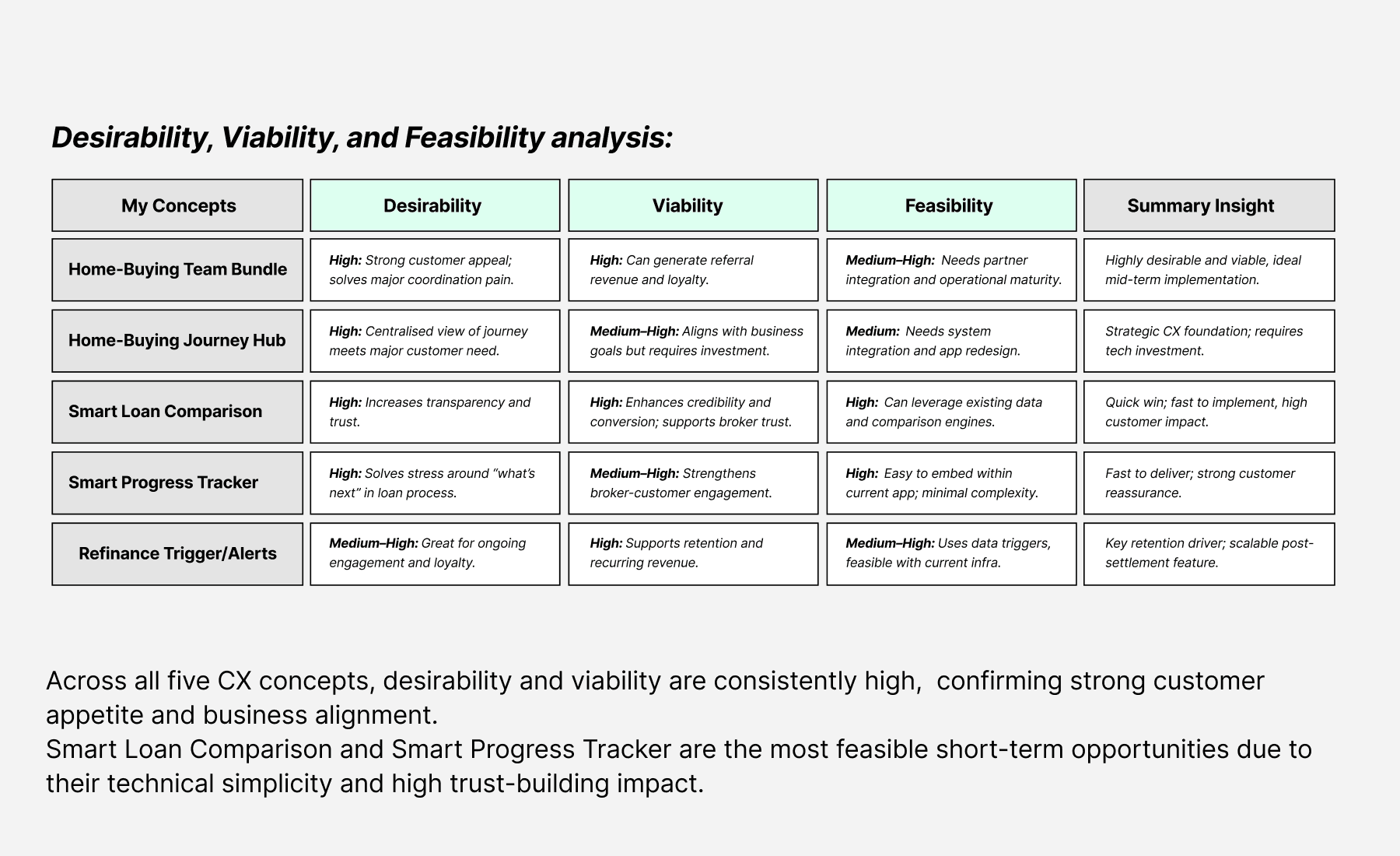
Next, I conducted a DVF analysis to evaluate the desirability, viability, and feasibility of the solutions, ensuring they meet both customer needs and business goals.
Reflection
This project strengthened my ability to connect research, strategy, and design into a clear end-to-end experience.
I learned how to translate insights into actionable opportunities, and then into measurable outcomes through defined CX goals and metrics. It also reinforced the value of using structured frameworks, such as STEEP and DVF, to support more informed and confident decision-making.